
Before You Correct the Dog, Understand the Dog: Meet Cincinnati Trainer Lisa Desatnik
From a noisy African grey parrot to a career helping dogs and their people, the founder of So Much PETential has followed an unconventional path—guided by curiosity, compassion, and a belief that behavior is communication.
Sources checked: October 9, 2026
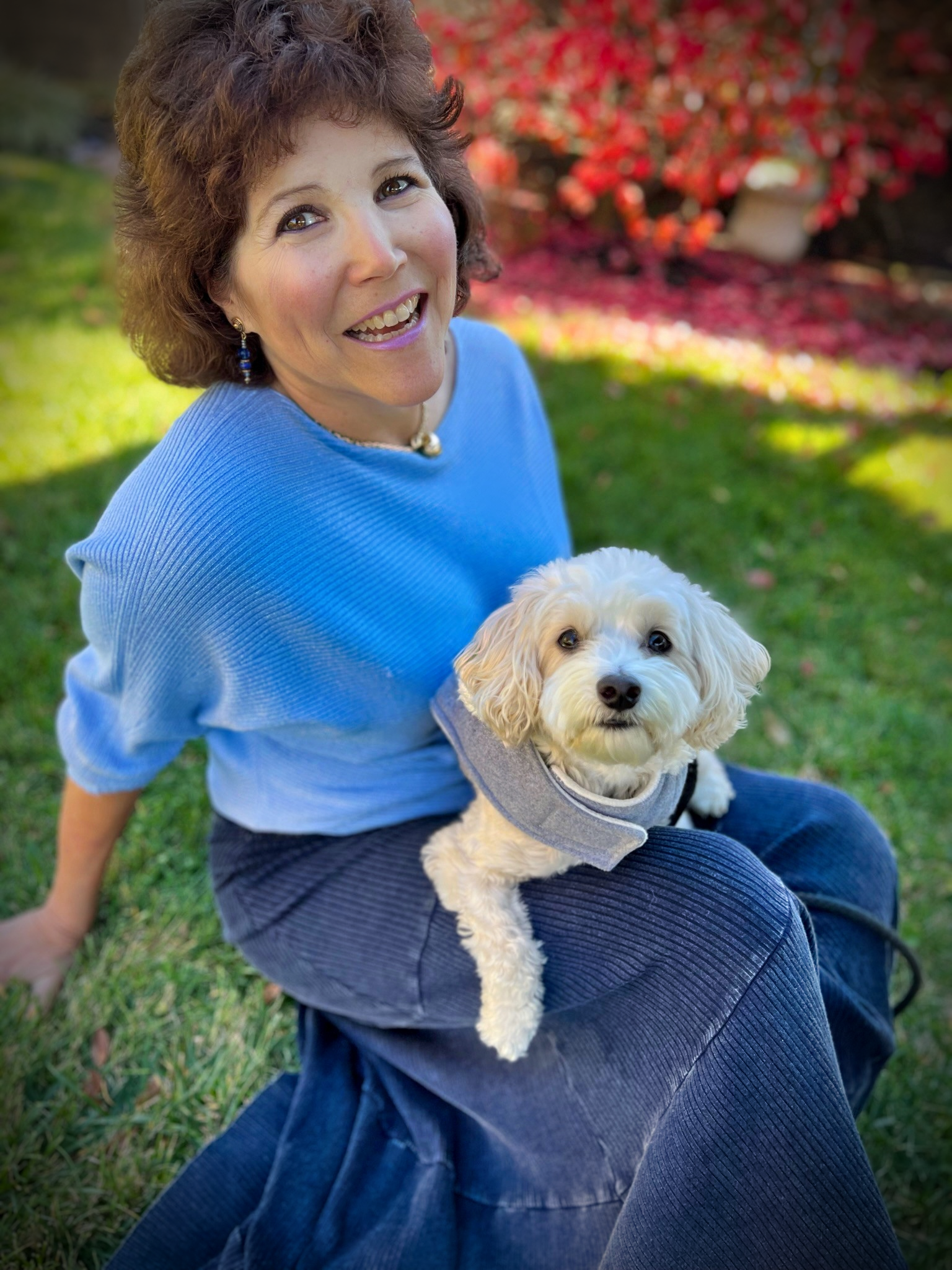
Barnaby had a problem. Or, more accurately, Lisa Desatnik had a problem with Barnaby.
The African grey parrot had discovered a sound he particularly enjoyed making: the piercing scream of another bird in the household, an Alexandrine ringneck named Chester.
For Desatnik, who had worked hard to create a quieter home, the imitation was maddening. She started searching for a way to change the behavior.
What she found would eventually change her career.
Today, Desatnik is the Cincinnati-based professional behind So Much PETential, where she helps people understand and work with their dogs through humane, science-based training. Her qualifications include CPDT-KA, FFCP, FDM, and CPBC, reflecting years of study across animal behavior, dog training, family-dog relationships, and parrot behavior.
But her professional story began long before she became a dog trainer—and, fittingly, it began with learning to listen to an animal.
An Animal Lover Who Took a Different Career Path
Desatnik describes herself as an introverted child whose family dog was her closest companion. She was also the child who came home from the creek with a crayfish, a frog, or a turtle, or who wanted to help a bird in trouble.
Animals were always part of her life. Working with them professionally was another matter.
Her first career was in public relations and community-focused communications. She worked with nonprofit organizations and initiatives throughout Greater Cincinnati, helping bring people together around causes she cared about.
Her projects included work with the YMCA of Greater Cincinnati, the Inclusion Network, and the ReelAbilities Film Festival. She also helped promote Hidden Treasures, a Cincinnati music project connected to the city's King Records heritage.
The common thread was community: helping people connect, participate, and feel included.
Meanwhile, her interest in animal behavior was growing.
After college, apartment restrictions prevented her from having a dog, and a cat allergy ruled out another possibility. Birds became her companions instead.
Then came Barnaby's screaming.
The Discovery That Changed Everything
While researching humane approaches to behavior, Desatnik encountered an online discussion group led by Dr. Susan Friedman, then a psychology professor at Utah State University.
Friedman was teaching parrot owners about applied behavior analysis—an approach that examines behavior in relation to the circumstances and consequences surrounding it.
For Desatnik, the ideas were transformative.
Instead of focusing only on stopping an unwanted behavior, she began looking at why it was happening and what could be changed to help the animal succeed.
Friedman worked with her on the challenges she was experiencing with her birds. Desatnik says the experience changed both her understanding of behavior and her relationship with Barnaby.
The once-frustrating parrot became, in her description, a prolific talker rather than a screamer.
And Desatnik couldn't stop learning.
She eventually began writing an animal-behavior column for Hyde Park Living. She recalled that Friedman reviewed her work during the early years to help ensure she was communicating the concepts accurately.
It was an early sign of something that would become central to her work: combining her communications background with an increasingly sophisticated understanding of animal behavior.
A Second Mentor—and a Leap of Faith
Years later, another chance encounter helped move Desatnik toward professional dog training.
At a dog-training conference, she met Mike Shikashio, a behavior professional known for his work with aggression in dogs.
Desatnik had studied animal behavior extensively, but she wasn't confident about turning that knowledge into a new profession.
Shikashio encouraged her.
Eventually, she asked whether he would mentor her if she decided to try.
He agreed.
With that support, and the support of another early mentor, respected dog trainer Barb Gadola, she began building her training practice while continuing her public relations work.
In 2020, amid the disruptions of the pandemic and following the loss of her mother, she decided to make the transition to pet training full-time.
It was a substantial change in profession, but Desatnik sees continuity between the two careers.
Both, she explained during our conversation, have been about supporting lives and improving quality of life.
What Is Your Dog Trying to Tell You?
Ask Desatnik what she wishes more dog owners understood, and her answer begins with a change in perspective.
When a dog jumps, barks, resists a walk, or behaves in a way that frustrates its family, the first question shouldn't necessarily be how to stop it.
It should be why the behavior is happening.
She encourages owners to consider whether their dog's needs are being met, whether the dog has learned the skills needed for a particular situation, and whether fear, discomfort, or another underlying issue might be involved.
Consider an energetic adolescent dog that jumps excitedly on visitors.
Simply demanding that the dog stop jumping doesn't address everything that may be driving the behavior. The dog may need appropriate outlets for energy and excitement, along with a different skill to use when guests arrive.
And more physical exercise isn't always the complete answer.
Desatnik points out that mental activity matters, too. Constantly increasing physical exercise may simply produce a dog with greater endurance, without addressing the underlying need.
The goal is not merely to suppress an inconvenient behavior. It's to help the dog develop better ways to navigate its world.
Sometimes the First Lesson Is Feeling Safe
One of the most revealing moments in our interview came when Desatnik described a young dog whose behavior was being misunderstood.
The dog frequently rolled onto her back and exposed her belly around people.
To an observer, that might look like an invitation for affection.
But Desatnik noticed other signals: lowered body posture, ears held back, and signs of uncertainty.
Rather than immediately petting the dog or pushing ahead with conventional training exercises, she began working on helping the dog feel more comfortable.
During the visit, she adjusted her own behavior, gave the dog space, and used carefully managed interactions to encourage more confident engagement.
The dog's family had expected training to begin right away.
Desatnik's response was that this was training—but there were more fundamental needs to address first.
The example illustrates an important distinction: a behavior cannot always be understood by looking at one gesture in isolation. Context and the animal's overall body language matter.
It also demonstrates why Desatnik resists one-size-fits-all answers.
Each dog brings its own temperament, experiences, needs, and relationship with the people around it.
Learning to Give Dogs More Choice
Desatnik frequently returns to the importance of predictability, safety, and what behavior professionals call agency—the ability to exercise some control and choice.
For a fearful dog, knowing what will happen next can make an unfamiliar situation less overwhelming.
And giving an animal an appropriate opportunity to opt in or decline can help build trust.
Desatnik sees the same principle in her birds.
If Barnaby doesn't want to step onto her hand, she pays attention to his response rather than simply forcing the interaction.
Sometimes she can make the invitation more appealing. But the important point is that she is noticing what he communicates.
Her own dog, Dawson, has also taught her a great deal about adapting expectations.
Desatnik originally imagined a dog who could accompany her to events and perhaps participate in therapy-dog work.
Dawson, however, has significant anxiety challenges.
She learned that the life she had pictured wasn't necessarily the life that would suit him.
Instead, she found activities and environments in which he could feel comfortable and enjoy himself.
He can thrive in some outings that work for him, even if other experiences—such as dog parks—are not appropriate.
For Desatnik, that isn't a failure of training. It's part of understanding the individual dog.
Compassion for the People, Too
It's easy to focus entirely on the dog in a conversation about behavior.
Desatnik doesn't.
She recognizes that people dealing with a fearful, reactive, or difficult-to-manage dog may be overwhelmed themselves.
Some are making complicated decisions about safety, veterinary care, household routines, or what their dog's future can realistically look like.
Her approach involves helping the people understand what is happening, identify achievable goals, and recognize progress.
She also emphasizes that some behavior challenges require veterinary involvement. Pain, medical conditions, or significant anxiety may contribute to behavior in ways that training alone cannot resolve.
In more complex cases, she may encourage clients to work with a veterinarian or veterinary behavior specialist.
It's another expression of her underlying philosophy: understand the problem before deciding on the solution.
A Different Definition of Success
Perhaps the most compelling idea from our conversation was Desatnik's willingness to reconsider what success looks like.
Not every dog needs to enjoy crowded patios, dog parks, visitors, or outings with other dogs.
Not every dog will become the companion its owner originally imagined.
And not every behavioral challenge can be solved by teaching another command.
Sometimes progress means a dog feels safer at home. Sometimes it means a family understands a previously confusing behavior. Sometimes it means adjusting expectations so both the dog and the people can enjoy a better quality of life.
Desatnik's journey—from public relations to parrot behavior to professional dog training—has given her an unusual combination of skills.
She understands how to communicate complicated ideas. She knows how to help people learn. And she has spent years studying what animals may be telling us through their behavior.
The result is an approach that begins not with a command, but with curiosity.
Barnaby's screaming may have started the journey.
Learning to listen is what made it meaningful.
Meet Lisa Desatnik
Lisa Desatnik, CPDT-KA, FFCP, FDM, CPBC is the Cincinnati-based founder of So Much PETential, providing humane, science-based pet training and behavior education.
Learn more at So Much PETential .
This article is based on an interview conducted by Chris Harris for Good Dog Cincinnati on October 6, 2026.